Emnlp26main1st
I’m very excited to share that our paper Who Annotates in NLP? A Large-scale Assessment of Human Annotation Reporting between 2018 and 2025 has been accepted to the main conference at EMNLP-2026! 🎉 Thanks to the great team behind the paper, in particular, Gagan Bhatia and Lisa Sophie Albertelli, whose invaluable contributions made this paper possible.
Paper: https://arxiv.org/abs/2606.02255
The project started at an academic retreat at Speinshart Monastery as a collaboration between the NLLG Lab at UTN, led by Prof. Dr. Steffen Eger
and NLP@IT:U, led by Prof. Dr. Yufang Hou
Human annotation remains a backbone of NLP research but how well do we actually report who our annotators are and how annotation is carried out?
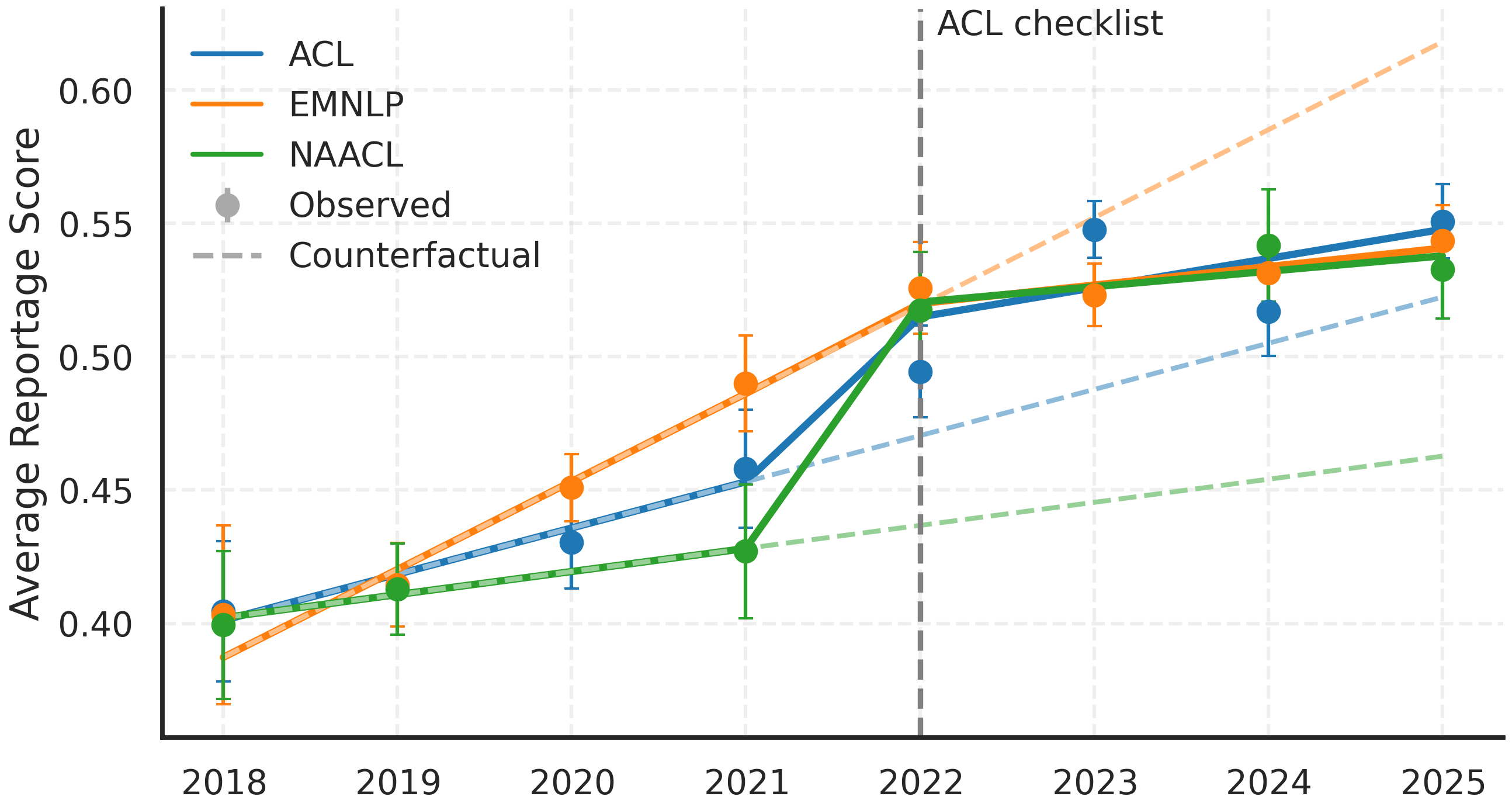
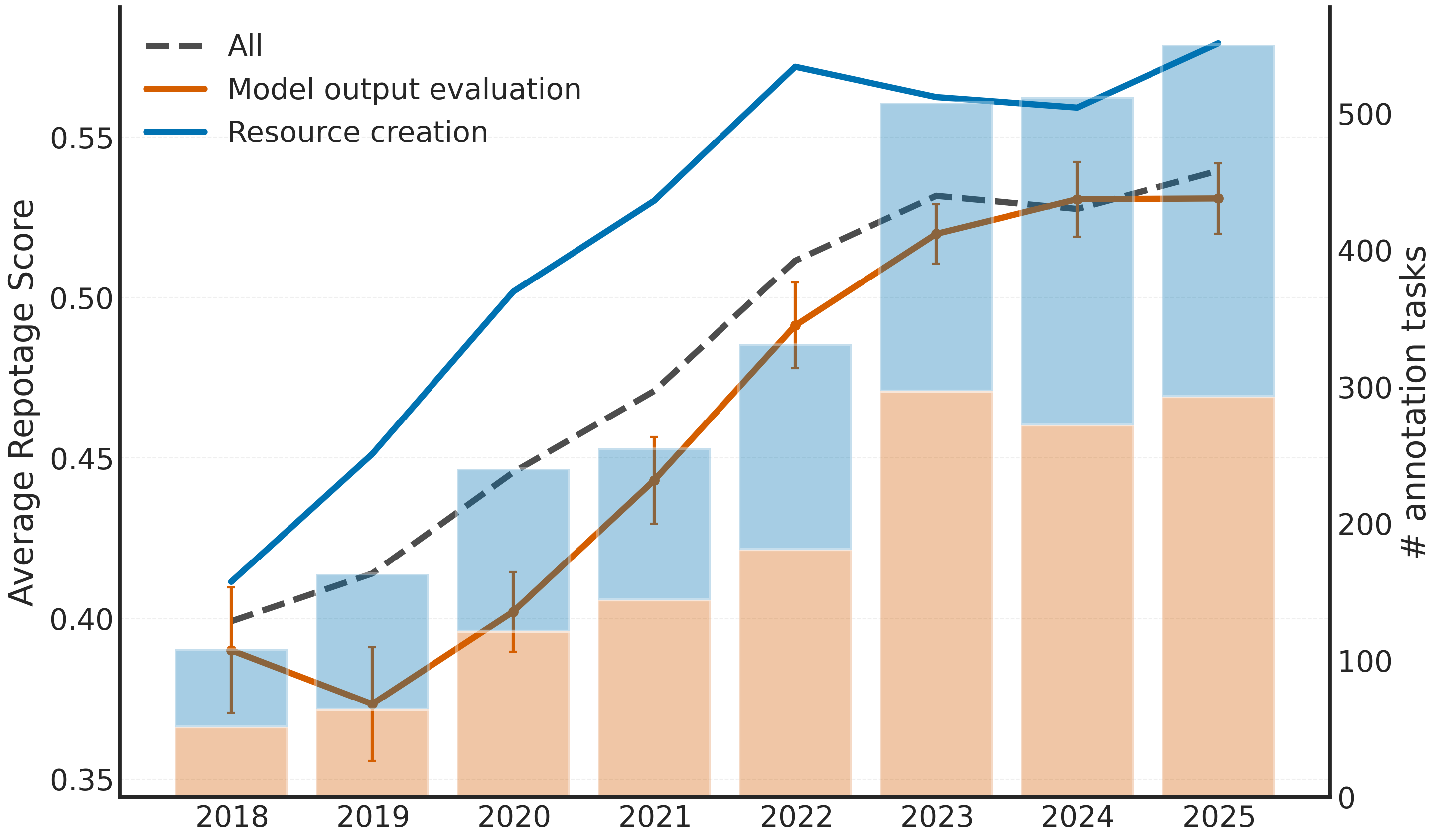
We manually annotated a sample of NLP papers involving human annotation and extended the analysis to more than 2,000 papers from six ACL venues published between 2018 and 2025, allowing us to trace changes in annotation reporting practices over time.
The good news: reporting quality has noticeably improved.
The less good news: many attributes of human annotators that are crucial for assessing the reliability and for interpretation of collected judgments remain under-reported. This is particularly pronounced in studies using humans to evaluate LLM outputs.
We are releasing the datasets with the paper, allowing further exploration of human annotation practices and their documentation in NLP papers.